
The nor’easter roars today, blowing wind and rain from the northeast just like its name.
It is an extratropical cyclone weather phenomenon, with cold air at its center, unlike a hurricane which is powered by warm air. With the moon in its full phase, the tides roll in extra high and reshape the beach: more sand in the reeds, shell piles rearranged, pilings and old cement foundations more exposed. This morning, a solo cormorant rode the waves. One ship, loaded with oil, left port. A half dozen seagulls flew just above the waves. All in all, it’s a good day to be at home and watch the weather, as I write.
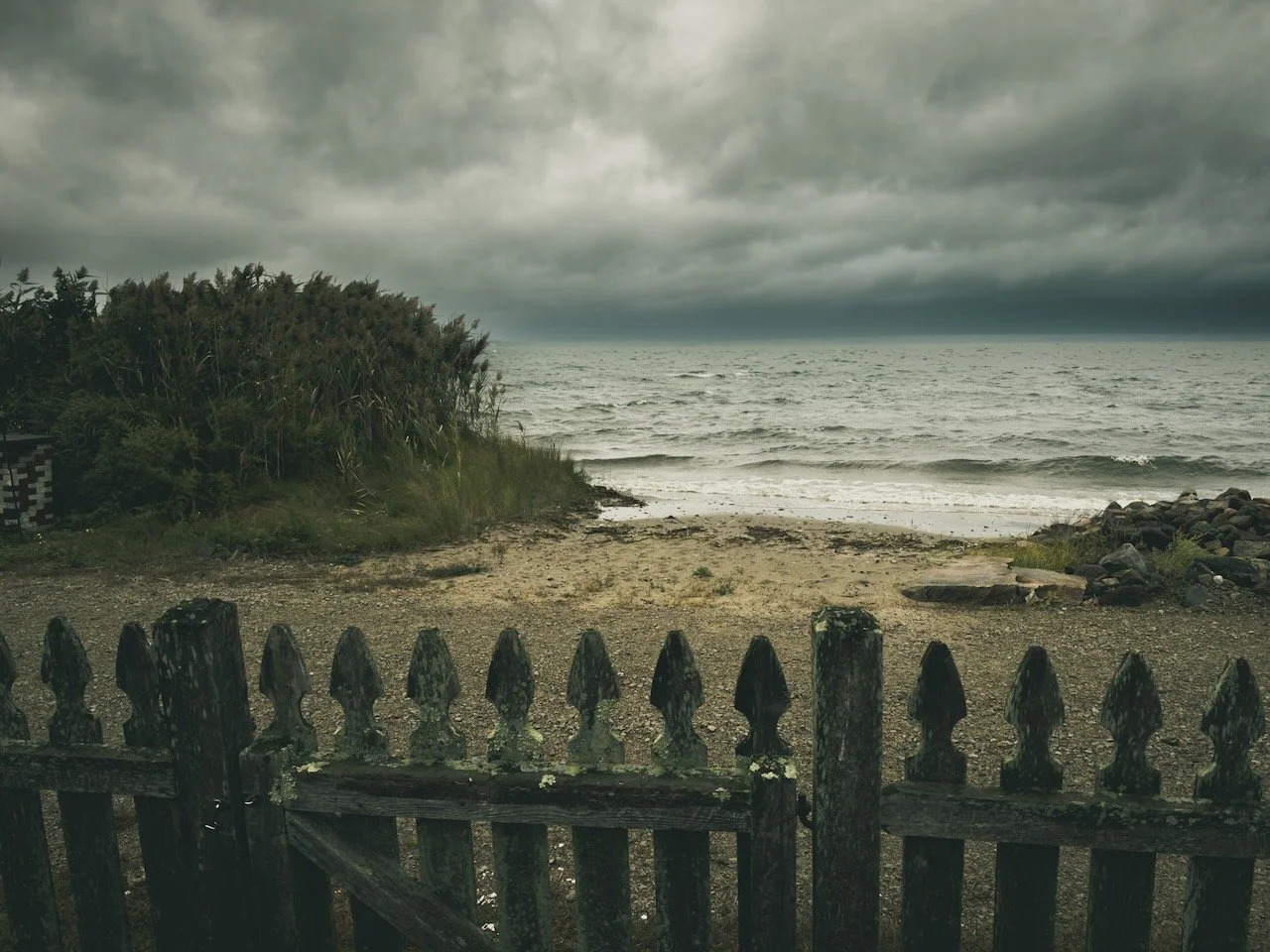
~Reed Pike
A few days ago, we crossed the halfway point of our light and dark 24-hour cycle, the Autumn Equinox which stands opposite of the Spring Equinox, the shortening versus the lengthening of our daylight. Here in Rhode Island, the red-wing black birds and the osprey have left. The Brandt geese have not yet arrived. Overhead the “Vs” of Canada geese honk during flight. My cherry tomatoes are ripening more slowly after a bountiful season: sunburst orange, purple, and red grape. The ears of corn from the nearby farm market have become precious. Reed and I split ears rather than each having one of our own. It’s flu shot time and my Chrysanthemums burst into flaming gold, maroon, and purple.
Looking forward, I just reviewed the cover possibilities and the layout of my new novel: The Education of Women: The Legacy of Elizabeth Blackwell, which will be published this spring by Brother Mockingbird, a small press in Mississippi. It is exciting to have reached this stage.
I’ve been reading the diary of Etty Hillesum, an adult Anne Frank, who was in her late twenties when she lived in Amsterdam before she was taken to the transit camp at Westerbork, and then died at Auschwitz at the age of 29 in 1943. I came across her writing in a daily meditation post from the Center for Action and Contemplation (founded in the late 1980s by Franciscan priest Richard Rohr.)
Although Jewish, Etty was unaffiliated in her spiritual beliefs and really has the insights of a contemporary mystic. Her diary musings speak about celebrating the ordinariness of life, recognizing its spiritual essence and continued gifts. For example, she observed the horse chestnut tree outside her attic bedroom window and routinely noted its beauty, how it changed through the day and night, and through the seasons. She described two stars twinkling between the branches one cold and clear winter night. She recounted the joys of listening to classical music with her friends and sharing cake. As roads and parks were closed to Jews, she wrote:
[As] I cycled along the Station Quay, enjoying the broad sweeping sky above at the edge of the city… on the one narrow path still left to us, overhead stretches the sky, intact. . . the sky within me is as wide as the one stretching over my head.
“Her writing testifies to the possibility of awareness and compassion in the face of the most devastating challenge to one’s humanity.” (Eva Hoffman)
Etty’s insights serve as a road map for maintaining sanity and spiritual grounding in today’s chaotic world. The likely widening war in the Middle East, the uncertainties of Artificial Intelligence, our current president’s misuse of power, his lack of humanity and the ugliness he spews when on the global stage are all deeply concerning. Indeed, these are difficult times. But the human spirit is resilient.
And another reminder of that resilience is Annie Dillard. I’ve read many tributes to her since she died last week. Here is one for the road: When most mainstream writers dismissed religious faith, Dillard took the opposite tack:
On the whole, I do not find Christians, outside of the catacombs, sufficiently sensible of conditions. Does anyone have the foggiest idea what sort of power we so blithely invoke? … It is madness to wear ladies’ straw hats and velvet hats to church; we should all be wearing crash helmets. Ushers should issue life preservers and signal flares; they should lash us to our pews. For the sleeping god may wake someday and take offense, or the waking god may draw us out to where we can never return.
—Teaching a Stone to Talk
May insights and inner peace blow toward you, and may you find a life raft to anchor you.