
Salt of the Earth
Sodium (Na), element number 11, on the periodic table plus chloride (Cl), number 17, equal salt. We use salt to flavor food, preserve food, soak in (Epsom salts) and rinse wounds. Margaritas are served with salt around the glass rim. Salt melts icy roads and walkways in the winter, and softens hard water so there are suds when we scrub. It is essential in to intravenous fluids, salt blocks for animals to lick, and a key ingredient for making plastics and cleaning fluids. I could go on.
The average salt content of the ocean is about 3.5%, but the Dead Sea is ten times that or 35%. Even saltier as the water is piped elsewhere.
I spent the week contemplating and learning about salt as I hiked the “salt trail” in Bavaria. Salt was the reason for the wealth of Salzburg and the Habsburg family who built their early European dynasty. Who knew?
Europe was at the bottom of the sea until the waters receded and Adriatic Plate pushed into the Eurasian Plate to form the Alps. Deposits of salt were embedded in the clay and rock in Bavaria. For 7000 years it has been mined deep in the Alps in the Salzkammergut region and traded. White Gold was essential when there was no refrigeration. It gave birth to the healing spa towns of Bad Ischl, Bad Durrnberg, and Bad Goisern, to name a few; bad meaning bath or spa. Of course, the wealthy and Catholic church benefited from the salt trade, not the workers.
The melt of the last continental glacier in Northern Europe carved rivers and created lakes and left passages of rocky debris that when cleared became tunnels that early miners fortified with the abundant wood in the forests. These tunnels were used to carry the salt through the mountains.
The same tunnels were used during WW2 by the Nazis to store the artwork they plundered from European Jews and other cultural and religious collections so Hitler could build “the biggest art museum in the world” in Linz, his hometown.
The Altausee, near Halstatt, Austria, is one of the oldest salt mines that is still operating. My trek ended there and I visited the mine. A cool spot on a hot day. It was the storage site of thousands of art pieces. When Hitler was losing the war, he wanted to destroy the treasures. Miners worked to abort the bombing of their mine, their livelihood, as well as the art. The Monuments Men movie (2014) tells the story Hollywood style.
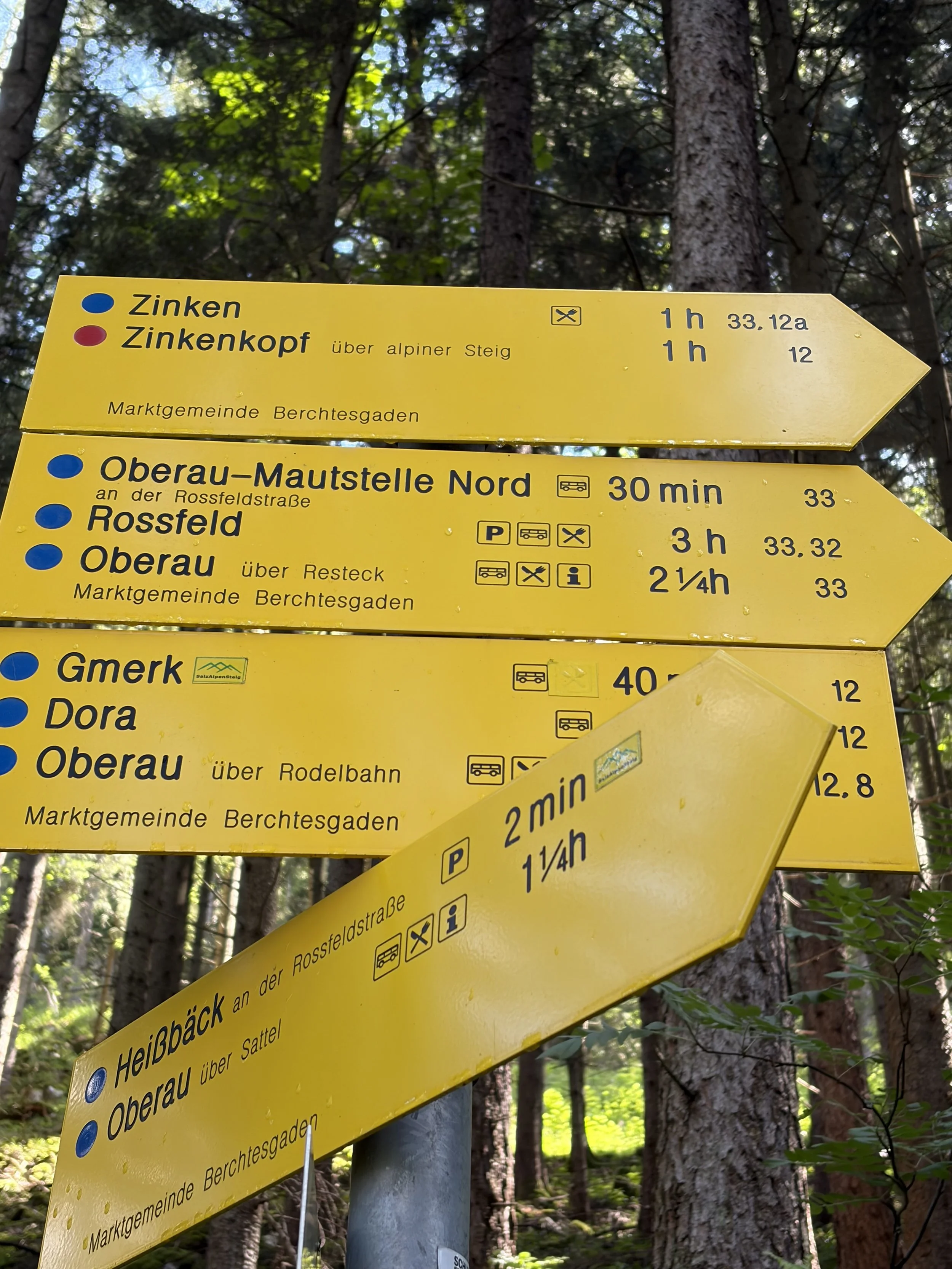
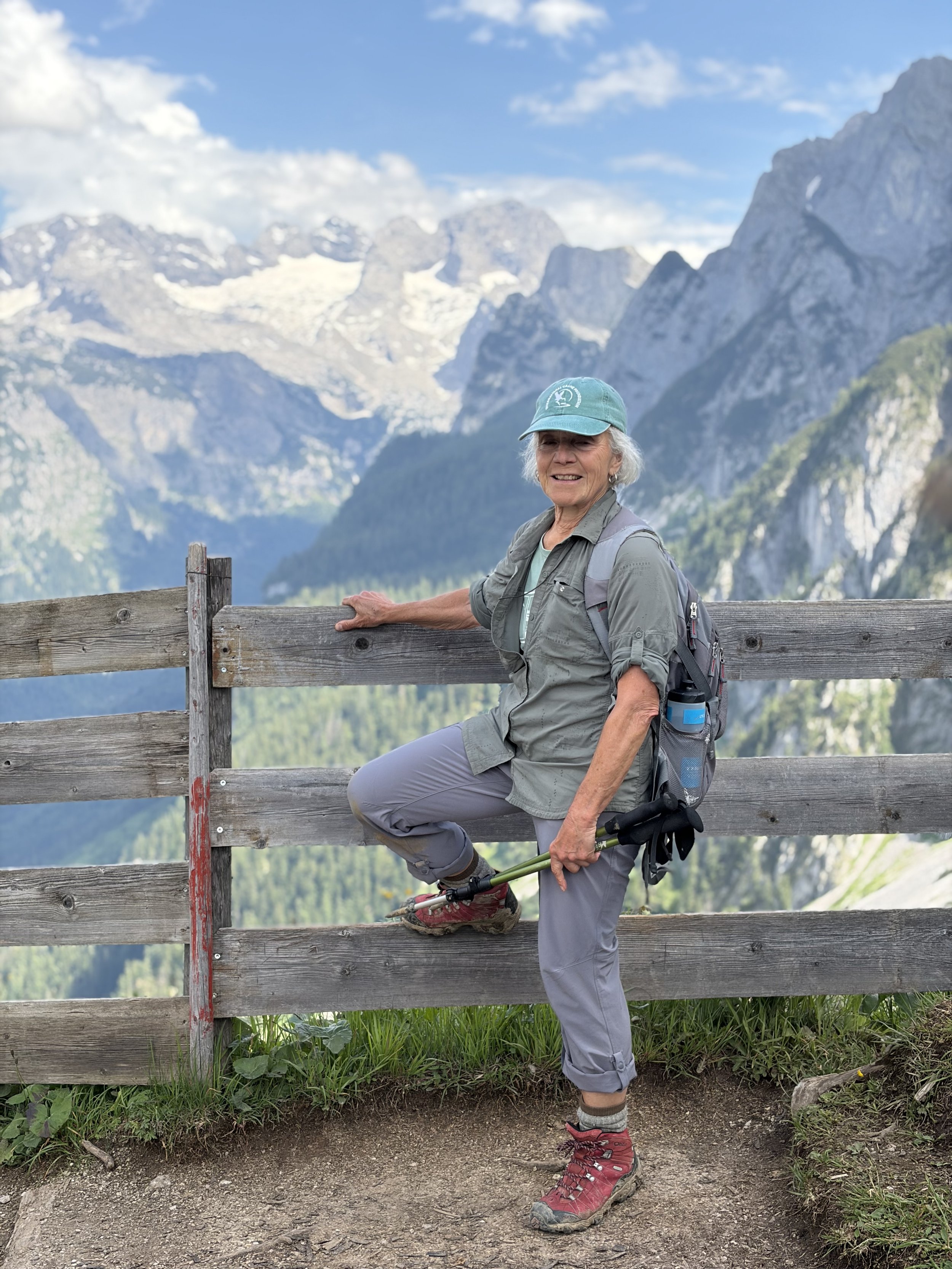
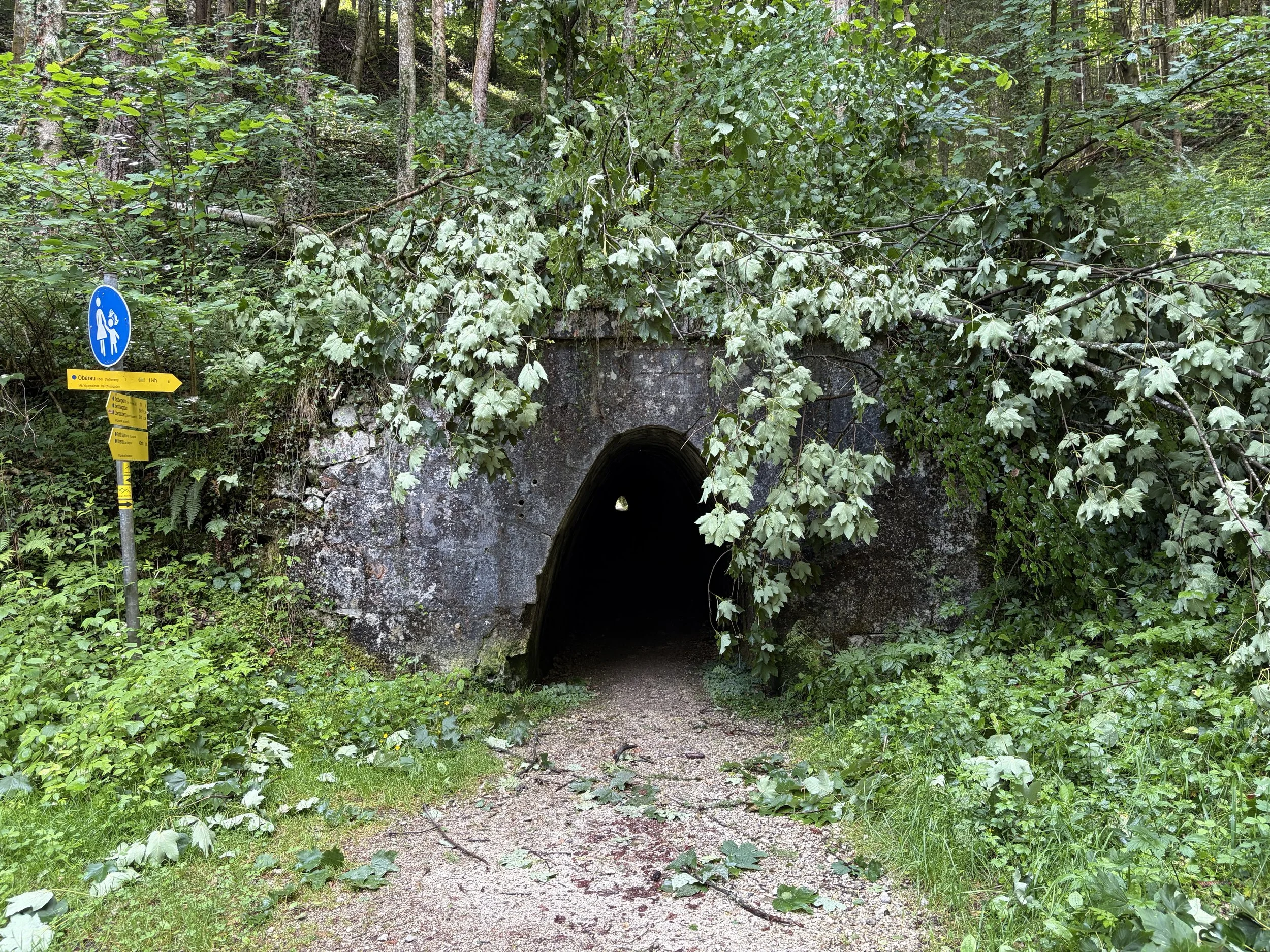
Rebecca Solnit in her book Wanderlust explores the history of walking and talks about the liberation of the mind at three miles an hour. In my trek, I was thinking in kilometers and meters up and down. And I moved slower since I was climbing and descending—thankful for my walking poles—that helped to steady my feet on the scree along the trail.
My mind did slow down as I focused on the birdsong, the smell of the pine, the color of the wildflowers, the warmth of the sun, and the cool of the shade. Being physically weary makes food taste better, I think. A long drink of water is savored.
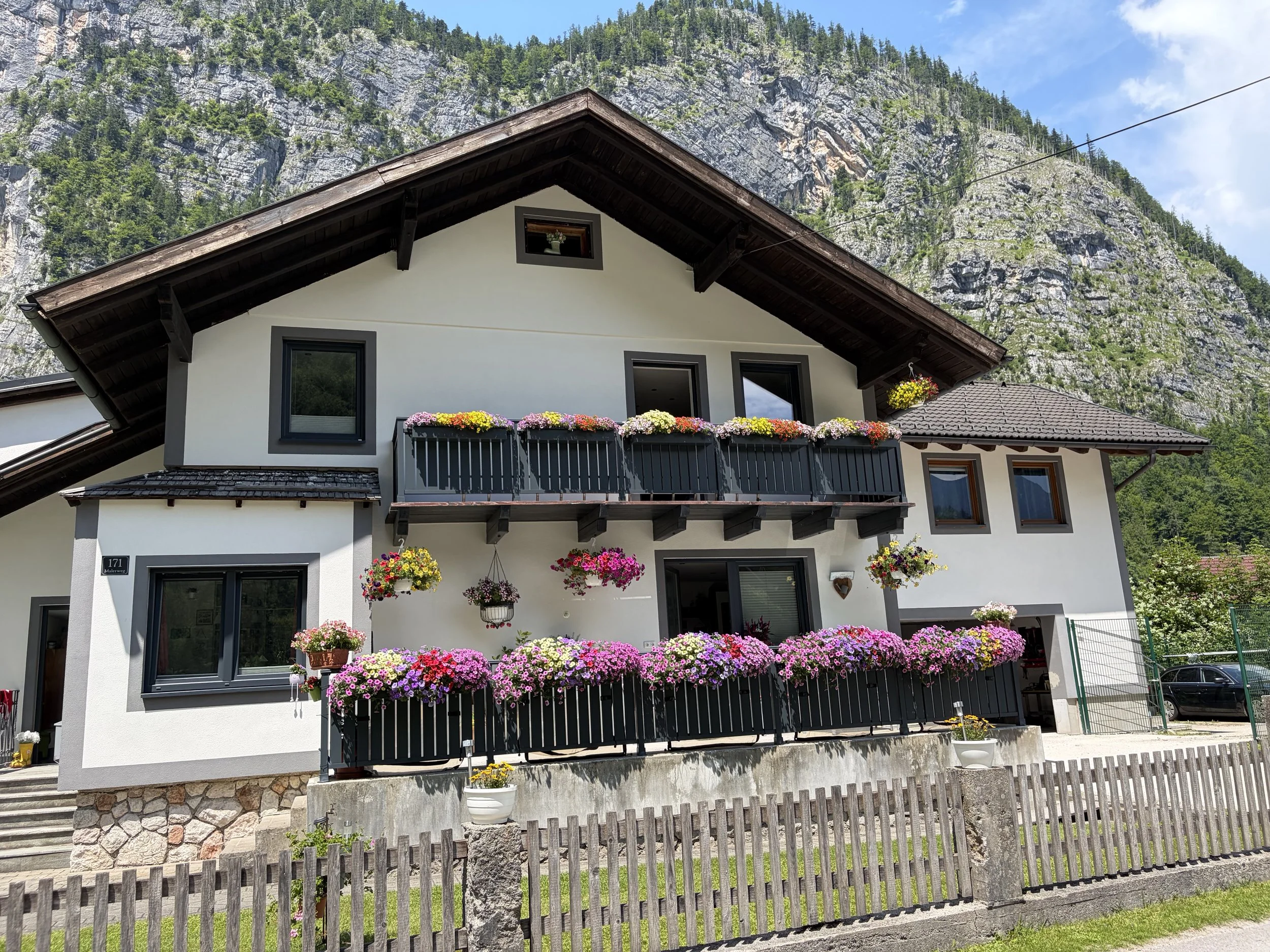
I was mostly alone, as I was early in the hiking season. An app, created by Euro-Hike, guided me and my luggage was transported from hotel to hotel, so I only had a day pack. I enjoyed the storybook charm of the Bavarian villages with manicured gardens and balconies adorned with abundant red geraniums. Cows and goats grazed in the fields, some with bells tinkling around their necks. Shrines were scattered along roads, many with fresh cut flowers. The church bells chimed the hours. Cemeteries honored departed loved ones with groomed plots with an array of blooming perennials and annuals.
Taking time to connect with the earth’s beauty during these difficult times of injustice and to appreciate the splendor of the world despite environmental degradation was healing. Joanna Macy, eco-philosopher Buddhist, argued that the pain and grief we feel for the suffering of the world are actually a measure of our deep care and love for it.
Rather than relying on optimism, Macy described hope as a practice. It involves waking up to the beauty of life and taking action on its behalf, regardless of the odds.
May you too find your way to practice hope. May you celebrate the elemental beauty of our world and find joy.